
Judge orders National Parks Service to restore “woke” quotes to Bunker Hill Monument
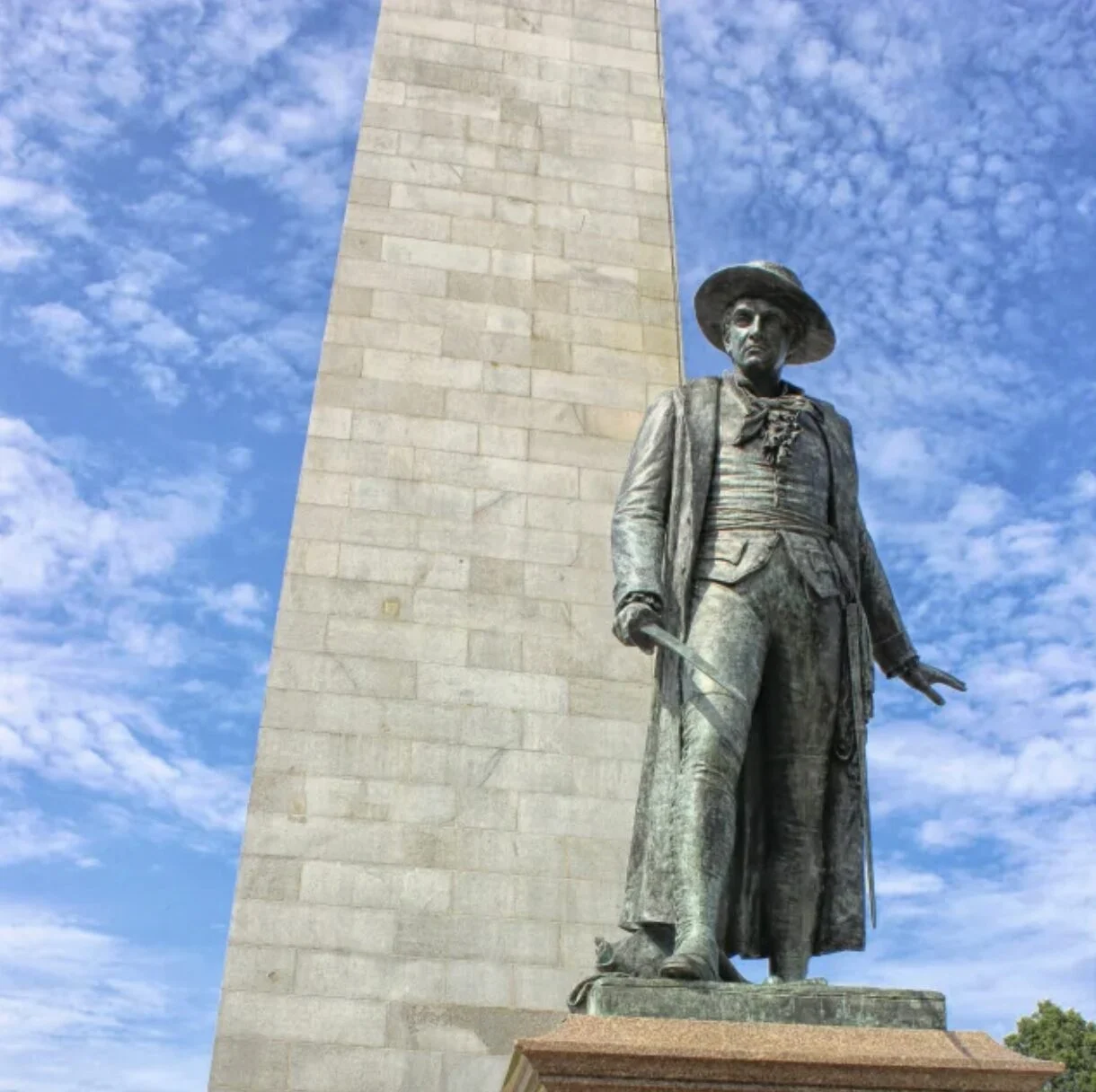
A federal judge has ordered the National Park Service to reinstall informational panels mentioning slavery, immigration, and suffrage that were removed from the Bunker Hill Monument.
The plaintiffs, five groups concerned about how censorship is affecting parks, argued that the Department of the Interior, which oversees NPS, removed signage arbitrarily and unlawfully, and in violation of congressional mandates governing how national park sites are to be operated.
“Plaintiffs have demonstrated a likelihood that Defendants’ efforts, ostensibly taken in the name of restoring dignity, instead seek to rewrite the Nation’s history with a white-out pen,” Massachusetts District Judge Angel Kelley’s injunction reads. “History cannot be faithfully told while excluding the experiences of communities whose contributions, struggles, and achievements form an important part of our Nation’s story.”
The Washington Post broke that NPS would be removing the panels in early June as part of a “routine exhibit refresh.” This came after a year-long effort by the Trump Administration to scrub a more critical, less favorable interpretation of American history from national monuments ahead of the country’s 250th anniversary next month and was met with criticism from local and state representatives.
City Councilor Gabriela Coletta Zapata called the removal of the signage unacceptable and an undermining of our history.
“The Battle of Bunker Hill was one of the earliest and most consequential battles fought in pursuit of the ideals of liberty that helped shape the America we know today. Preserving that history requires acknowledging all of the people and experiences that contributed to it, including the realities of slavery,” she said in a statement.”
Senator Ed Markey accused the Trump administration of trying to censor American history.
“American patriotism is backed by our freedom to speak and be heard,” Markey told WBUR. “And the Administration should learn from all the lessons of Bunker Hill: America was built on the fight for that freedom.”
The signs draw on various local and national references to the monument throughout its long history. One, an excerpt from an 1889 issue of Woman’s Journal likens the battle for women’s suffrage to that which occurred at Bunker Hill – “not won today but sure to be later,” wrote suffragist Lucy Stone.
Another, pulled from William Monroe Trotter’s 1925 Bunker Hill Day address, speaks to the role of African-Americans throughout U.S. history, including during the Revolutionary War.
“Colored Americans were here that day fighting with other patriots, our own ancestors, of whom we are justly proud and on whom we base our claim for full liberty and equality as citizens,” Trotter’s address reads.
“This is incredibly good news for all National Parks, but even more so for the many employees and former employees, who for decades have prided themselves for being able to provide truthful, accurate, and unbiased information to the millions of visitors who have come to expect that from the stewards of their National Parks,” said Association of National Park Rangers Executive Director Bill Wade.
NPS has been given a 21-day deadline to restore the exhibits ahead of Independence Day.
“Because Defendants deemed it important to strip the parks of these undeniable truths in anticipation of the 250th Anniversary of our great Nation, it is equally important that our shared history be honestly told and fully restored by the 250th Anniversary to properly honor the remarkable achievements of the United States,” said Kelley.

Jacob Downey is a contributor to Caught in Dot. He is formerly of The Clock, Plymouth State University’s award-winning student newspaper. He enjoys spending time with his two kittens – Gin and Tonic – reading Uncanny X-Men and writing about local government meetings.
Boston Police Department shares summer crime stats at four-hour public safety hearing
Now Casting: The Next Voice of Boston Logan International Airport
Slate Charlestown to Close After Seven Years in the Neighborhood